Shofar Super-Sounds
Description
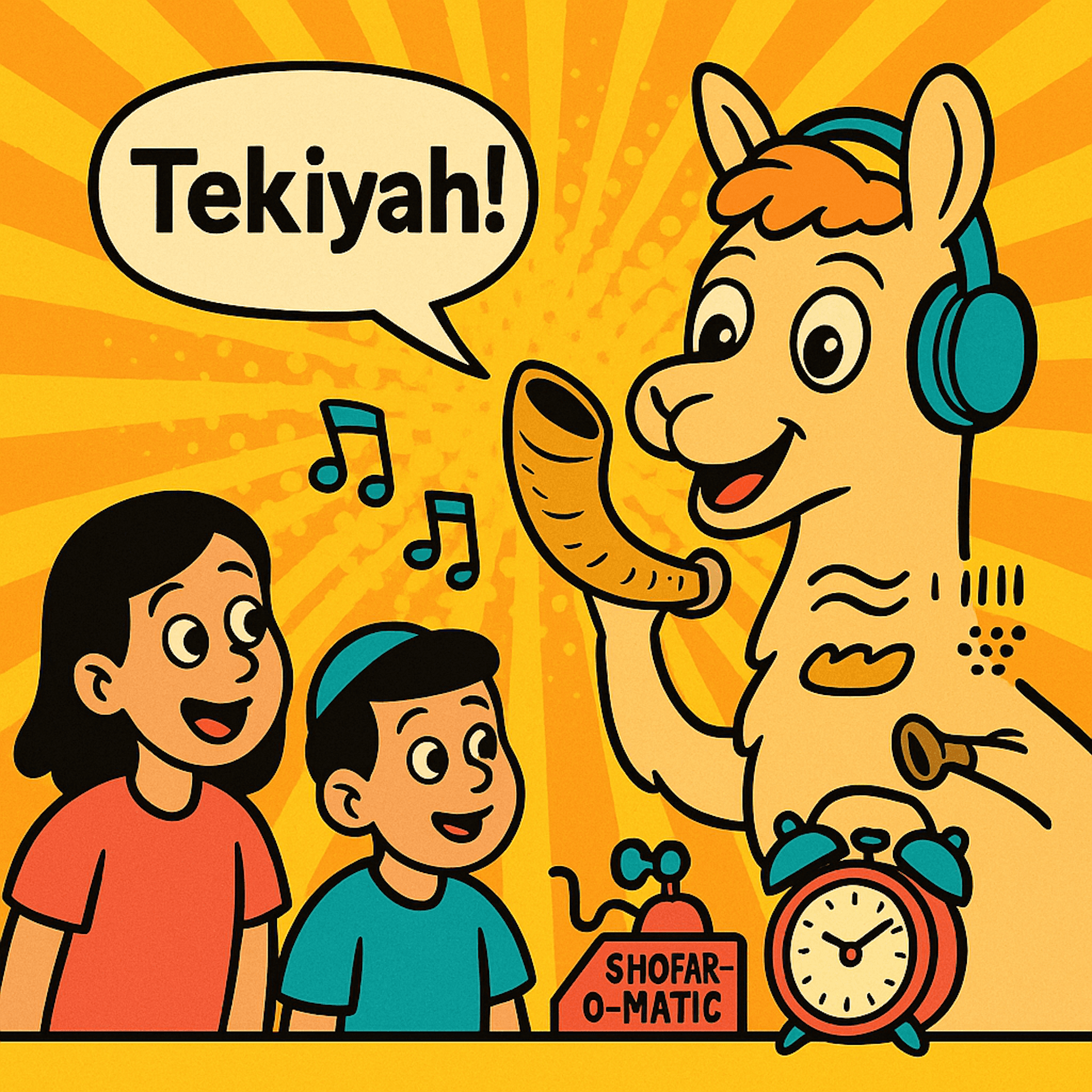
🎺 Shofar Super-Sounds — Why does the שׁוֹפָר have more than one kind of blast? Join Tali, Noam, and Lama the לָמָה as they test out the silly “Shofar-O-Matic,” discover the three special calls — תְּקִיעָה, שְׁבָרִים, and תְּרוּעָה — and learn how real breath makes sound waves that can wake up our hearts for רֹאשׁ הַשָּׁנָה. With goofy sound effects, clap-along games, and a big WOW quiz, this episode helps kids and families get ready for the season of תְּשׁוּבָה with joy, laughter, and כַּוָּנָה.
Listen
What this episode is about
Why does a שׁוֹפָר have more than one kind of blast? Tali’s wobbly “Shofar‑O‑Matic” goes quack‑honk‑ding, Noam brings the facts, and לָמָה asks the big לָמָה. Together we hear and feel the three classic calls—תְּקִיעָה, שְׁבָרִים, תְּרוּעָה—learn how נְשִׁימָה (breath) becomes גַּלֵּי קוֹל (sound waves), and practice listening with כַּוָּנָה as we get ready for רֹאשׁ הַשָּׁנָה.
Parent/Teacher note: Customs (מִנְהָגִים) vary by family and community. When in doubt, שְׁאֲלוּ רַב/הוֹרֶה. We don’t include blessings here; please learn them with your family.
Listen‑for Guide (kid‑friendly)
תְּקִיעָה — one long, steady blast שְׁבָרִים — three medium “broken” notes תְּרוּעָה — nine tiny, quick notes Pattern “recipes”: תַּשְׁרַ״ת (תְּקִיעָה–שְׁבָרִים–תְּרוּעָה–תְּקִיעָה), תַּשׁ״ת, תַּרַ״ת Finale you might hear: תְּקִיעָה גְּדוֹלָה
Chapter Markers
00:00–00:50 — Cold open: Alarm flop & the Shofar‑O‑Matic hijinks 00:50–01:10 — The Big Question: “לָמָה several blasts?” 01:10–05:40 — Big Idea A: Meet תְּקִיעָה / שְׁבָרִים / תְּרוּעָה + patterns 05:40–09:20 — Big Idea B: Breath → buzz → horn → גַּלֵּי קוֹל 09:20–12:00 — Big Idea C: כַּוָּנָה & gentle תְּשׁוּבָה steps 12:00–14:10 — Game: “Two Nu’s & a Wow!” (3 speedy rounds) 14:10–16:40 — Make/Do: Paper‑Trumpet & Pattern Parade 16:40–17:20 — Values wrap & goodbye
Key Hebrew Vocab (with simple glosses)
שׁוֹפָר — ram’s‑horn trumpet תְּקִיעָה — long, steady blast שְׁבָרִים — three medium “broken” blasts תְּרוּעָה — nine tiny, quick blasts תְּקִיעָה גְּדוֹלָה — extra‑long finale blast כַּוָּנָה — focus/heart‑intention תְּשׁוּבָה — returning/doing better/saying sorry מִצְוָה — holy job/command קוֹל — sound/voice נְשִׁימָה — breath גַּלֵּי קוֹל — sound waves מִנְהָג / מִנְהָגִים — custom(s) הֲלָכָה — Jewish law רֹאשׁ הַשָּׁנָה — Jewish New Year
Try‑It‑At‑Home: Paper‑Trumpet & Pattern Parade
You’ll need: 1 sheet paper, tape, a cardboard tube (paper‑towel roll), markers. Safety: Scissors only with grown‑up help. This is a toy, not a שׁוֹפָר for the מִצְוָה.
-
Roll the paper into a cone; tape the seam.
-
Slide the tube into the small end so it fits snugly.
-
Decorate with swirls and a bold “קוֹל”.
-
Practice gentle humming (not yelling).
-
March your Pattern Parade with claps:
תְּקִיעָה = 1 long clap שְׁבָרִים = 3 claps תְּרוּעָה = 9 claps Try תַּשְׁרַ״ת, תַּשׁ״ת, תַּרַ״ת—then swap claps for toe‑taps!
Game Key: “Two Nu’s & a Wow!”
Round 1: What’s the long, steady blast? → תְּקִיעָה Why: It’s one continuous note—great for calm, focused listening. Round 2: What powers a שׁוֹפָר? → נְשִׁימָה Why: A person’s breath makes the horn vibrate—recordings don’t count for the מִצְוָה. Round 3: What’s the extra‑long finale? → תְּקִיעָה גְּדוֹלָה Why: Many shuls finish with a held note to help hearts remember.
Family & Classroom Discussion Starters
- Which שׁוֹפָר sound helps you listen with כַּוָּנָה? Why?
- What’s one small תְּשׁוּבָה step you can try this week?
- How does changing your breath change the sound you make?
- Our community’s מִנְהָג is… What’s similar or different in a friend’s shul?
- Where else do you hear patterns (music, steps, claps) that help you focus?
Halacha & Minhag Notes (friendly reminders)
The מִצְוָה is לִשְׁמוֹעַ קוֹל שׁוֹפָר—to hear the shofar. A recording or button press is not the same as a live person’s breath. Hearing clearly matters; echoes or muffled spaces can be tricky. Total blasts and sequences can differ (often around 100). Always שְׁאֲלוּ רַב/הוֹרֶה for what your family does.
Source Snippets (kept short)
בַּמִדְבָּר כ״ט:א — “יוֹם תְּרוּעָה יִהְיֶה לָכֶם.” תְּהִלִּים פ״א:ד — “תִּקְעוּ בַחֹדֶשׁ שׁוֹפָר.” רַמְבַּ״ם, הִל׳ שׁוֹפָר 1:1 — מִצְוָה לִשְׁמוֹעַ תְּרוּעַת הַשּׁוֹפָר. רַמְבַּ״ם, הִל׳ תְּשׁוּבָה ג:ד — “עוּרוּ יְשֵׁנִים מִשְּׁנַתְכֶם.” תַּלְמוּד רֹאשׁ הַשָּׁנָה ל״ג–ל״ד; שֻׁלְחָן עָרוּךְ או״ח תק״צ.
Movement & Call‑and‑Response Cues (use anytime)
Chant: “תְּקִיעָה—שְׁבָרִים—תְּרוּעָה—לֵב מִתְעוֹרֵר!” Chant: “בְּלִי נְשִׁימָה—אֵין תְּקִיעָה!” Chant: “אָרוֹךְ בַּסּוֹף—לֵב מֻכְרָח לִזְכּוֹר!”
Audio Cues to Notice
SFX: alarm sputter, wheels squeak, bicycle bell, lip‑buzz demo Shofar cues: clean תְּקִיעָה, שְׁבָרִים, תְּרוּעָה, and a תְּקִיעָה גְּדוֹלָה tail “Fake button” tinny horn vs. real breath contrast Sparkle chime during kindness moments; soft heartbeat under reflection
Volume tip: Real shofar sounds can be loud. Start at a lower volume, especially with headphones.
Values Takeaway
שׁוֹפָר helps us wake our לֵב—to notice, say “סְלִיחָה”, fix mix‑ups, and choose kind words and helping hands. Small steps = big heart.
Credits
Cast: Tali, Noam, and לָמָה the Llama Segment design: Cold‑open gag → Big Question → 3 Big Ideas → Mini‑Quiz → Make/Do → Values wrap Sound design checklist: recurring shofar cues; one‑off Shofar‑O‑Matic, alarm fail, sparkle chime
Share your Pattern Parade!
Tell us your favorite pattern (תַּשְׁרַ״ת / תַּשׁ״ת / תַּרַ״ת) and a כַּוָּנָה you’re practicing this week. And don’t forget to ask at home about your family’s מִנְהָג!